7 May Veggies You Need on Your Plate Now!May-15-2015
There are an abundance of fruits and veggies available in May, and this will vary slightly depending on where in the country you are located. Ask your produce manage or farmer what's in season near you! Here are seven of the many seasonal produce options for May:
Arugula. Arugula is actually a cruciferous vegetable, (also referred to as brassicas) which is the same family as broccoli, cauliflower and Brussels sprouts! Arugula is very high in chlorophyll, which is an important source of magnesium for the body. It is also high in vitamin C, the carotenoids, folate and fiber. Arugula has a peppery flavor and is great in salads, on sandwiches and makes a fantastic pesto.
Collard Greens are popular in the South, but should make their way to plates across the US. Collard greens are also a cruciferous vegetable, known for their anti-cancer and cholesterol-lowering ability. Collards are rich in many vitamins and minerals including vitamin K, A, manganese, vitamin C, fiber, calcium, choline, iron, vitamin E and the B vitamins. Lightly steamed collard greens make for great sandwich wraps!
Mushrooms are fungi - that means that they obtain their nutrition from metabolizing non-living organic matter. Bottom line - they break down and "eat" dead plants. According to volumes of studies out of Japan, China, Taiwan and Korea mushrooms are a medicinal food, and have been used in traditional medicine: as antitumor, antifungal, anti-arthritic, and anti cancer medicinal food for years. In addition, mushrooms are extremely low in calories with notable amounts of B vitamins, phosphorus, magnesium, potassium and selenium, as well as fiber.
Nectarines are actually the smooth-skinned peach of the family Rosaceae. A genetic variant of common peaches, the nectarine was most likely domesticated in China more than 4,000 years ago. Moreover, nectarine and peach trees are virtually indistinguishable. One medium fruit contains 2 grams of fiber and protein, vitamin C, and A as well as a small amount of iron.
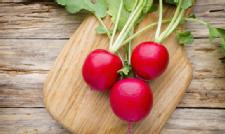
Radish. Radishes can be white, red, purple or black, and in terms of shape, it can be long and cylindrical or round. When shopping, choose those that are plump, firm, smooth, and free of cracks and blemishes. If you plan on serving radishes raw as a snack, buy them with the leaves still attached; they should be bright green and fresh. Best way to store radishes is in a perforated plastic bag in the crisper, but detached from their greens. Radishes are a good source of Vitamin C.
Scallions, green onion, and spring onion, are colloquial names, and might differ by where you are in the country. Each has a white base that has not fully developed into a bulb and green leaves that are long and straight. Both parts are edible and can be enjoyed both cooked and raw. Choose those with crisp, bright green tops and a firm white base. Store, wrapped in a plastic bag, in the crisper for up to five days. They are a good source of fiber, vitamin C, iron, calcium, vitamin K, and folate.
Turnips are root vegetables commonly grown in temperate climates worldwide for their white, bulbous taproot. Turnips come in all shapes and colors, from round to cylindrical and rose to black. They may be eaten raw or cooked. They are spicy and pungent, but when shredded in a salad or baked in the oven, taste great. Turnips are a great source of Vitamin C.
 Visit Website
Posted by Ken at 12:00 AM
Visit Website
Posted by Ken at 12:00 AM -
Link to this entry |
Share this entry |
Print